Showing posts with label emergency preparedness. Show all posts

Sep 27, 2013

Excuses, Excuses


I just finished reading The Cost of Not Prepping blog post from The Apartment Prepper and had to share some thoughts.  I have had people tell me "I know I need to be prepared."  They list several things they know they need to do, and intend to do, including "I'm going to order some Thrive." And yet they haven't taken any of those steps so far.

I know many of the excuses.  I'm not perfect and use some of them myself.  Some excuses are legitimate but many are the little things distracting us, especially the immediate needs taking importance over what we don't KNOW will happen.  Trust me, I'm familiar with distractions.  In our move this summer we emptied much of our water storage (for ease in moving - and several of the ones we didn't empty, well let's just say there were some very water moving boxes when we unloaded the truck).  We've now been in the house 2 months yesterday.  I've been a bit distracted by ripping out carpeting and helping to install new flooring throughout the house.  I've also been distracted by school starting, homework due tomorrow, and soccer/volleyball seasons starting.  So guess what I realized this week?  I haven't refilled my water!  We would have very little water storage if a disaster happened today that either cut off or contaminated my local water supply.

I heard a radio ad the other day that went through a person's day, then asked "if you knew today was the day BEFORE the F5 tornado, the flash flooding, the..." how would your day have been different?  Sometimes we do know ahead of time that an emergency is coming.  The weather forecasters tell us of a major winter storm coming, the tornado threat is elevated, a hurricane is in the Atlantic heading to the US coastline, and they tell us to prepare.  But because those predictions don't always come true, many of us put off even basic preparations on the probability that we'll be fine.  Someone else's house is going to be hit by a tornado, or be without power.  The hurricane is going to turn back out to sea.  That ice storm is not going to form until AFTER our part of the state.

Most of us know that we should be prepared.  So you're not reading this to be convinced that you need to do something.  You're most likely reading this for ideas or motivation to get started.  September is National Preparedness Month so we still have a few days to make some steps toward preparedness.  Take a few moments now to identify ONE thing you will do this weekend to become better prepared.  With it being Friday already, you may be thinking "Our weekend is packed.  I don't have time to add one more thing to it."  What will you be thinking if Monday is your emergency?  I'm a realistic person so here a few ideas of actions you can take that should only take a couple minutes.

Water Storage
  • Fill one container with water.  You could use an empty soda or juice bottle (wash it out first).
  • Order a water barrel, or water bricks.  (Links are to my online store for discounted prices.)

Build Your Home Store/Food Storage
  • Pick a family favorite recipe and buy the ingredients to make it.  I love that because of the long shelf life of Thrive Foods, I can always have the ingredients on hand to make them without worrying about them spoiling, or the power going out and the ingredients defrosting in my freezer.
  • Create a Q.  The Q is a great way to make a list of the Thrive Foods you want to have in your home.  Creating a Q takes a few minutes and you can create it without starting the shipments.
  • Start your Q.  I have a large percentage of my customer's Qs are inactive.  This means they were created but shipments were never started.  Go back to your Q and click Begin Shipments.  Grocery stores do not keep an endless supply of food and often shelves become empty when the weather looks grim.  And as much as I love Thrive, one negative about it is that I can't decide today that I need a can of Freeze Dried Chicken and have it by the end of the day.  The time to order is now, not the day before or of the emergency
  • Place an order.  Not ready to do a Q, but know a couple items you want?  Just call or email me and we'll get your order placed.  I've had so many orders lately be shipped the day after they're placed so I get what I need quickly.

Prepare for everyday emergencies
  • Put together a basic car kit.  For me, this means a pen that works with a pad of paper, some bandaids, granola or protein bars, a roll of paper towels and some bottled water in my van.  This would solve problems of kids declaring they need a snack right AFTER we leave the house to run errands (I am NOT stopping at a fast food place - sorry girls!).  I have a very active 6 y/o and I really should have a large supply of bandaids with me at all times.  And now I'm going to add another VITAL item to the list for my family - several ponytail holders.  Too often we arrive at soccer practice, gymnastics, or volleyball, without a ponytail holder and all of these do activities are much better without hair in your face.
  • Put together a hospital bag.  I have a 95 y/o grandmother with congestive heart failure.  Anytime she experiences chest pain, she thinks she needs to go to the ER.  You know you go a lot when the ER doc looks at you and asks how things have been since your last visit (and I don't know her from outside the ER - but if we did, I do think we'd be best buds).  I've gotten pretty good about having a book and project that are easily transportable (cross-stitch is not a good travel project, but a simple knit scarf is).  The bag also needs to include some more of the granola/protein bars from above and a water bottle.  It never ceases to amaze me that if I leave to go get a snack, THAT's when the test results come back and the doctor comes to update us.
  • Charge your electronics.  WAY too often my cell phone and my Kindle get down to a single bar of power.  That is NOT what I want as I'm facing an emergency.  I have been known to grab chargers on my way out the door to the hospital (see hospital bag above).  But what if it's a car accident on the corner that knocks out power to my house?
  • Fill your vehicles with gas.  I shared on Facebook this summer about my active 6 y/o playing in our yard and stepping on a roofing nail.  For the past several errands, I had noticed I needed gas but either didn't have time to stop or didn't have my debit card with me so I didn't fill up.  When I tried to rush my daughter to the ER, with a nail protruding from the bottom of her foot, it was not with joy that when I climbed into the van to go, my gas light reminded me that it had been on.  I knew that of all times to run out of gas this was not the time.  So on the way to the ER, I had to stop to fill up with gas, with a screaming child in the back seat.
  • Buy and connect a non-cordless house phone.  This is only for those of you with a house phone.  Years ago, we got a new set of cordless phones.  It wasn't until a car accident a mile away knocked out the power to our house that it occurred to us that the cordless phones wouldn't work during a power outage.  This was also at a time we had given up our cell phones to save money (we went back to cell phones after my grandmother's stroke).  There have been several times since that the only way we could call people was using that old fashioned phone because the power was out and cellular service was unavailable.
  • Pick up your house.  Do the dishes.  Do the laundry.  We are grateful that before my grandmother starting having health concerns, we moved her from Florida to leave just a few minutes from us.  But not all our family does, and some are facing major medical issues right now that could create a family emergency trip out of town.  IF I needed to pack bags quickly, it's much easier if clothes are washed AND put away.  It's also easier if I'm not tripping over things scattered across the floors of the house.  And what if the family emergency means I have last minute guests in my home?  Definitely easier to feed them if my sink is not stacked with dirty dishes from the past 3 days.
  • Replace the batteries in your smoke detectors and weather alert radios.  I noticed just this week that our weather radio is flashing a message to replace the battery.

Now it's time to pick your to do item from my list above or one of your own ideas.  Today could be the day before your emergency.  Get prepared!

Apr 22, 2013

Could you survive a lockdown?

I was using my blog reader (I've really got to figure out my replacement for Google Reader ASAP) and came across this blog post from Food Storage Moms Would you have enough food and water for a lockdown in your neighborhood?.  And as I read it, I was grateful to answer Yes (except I do need to replace my water as it's all several years old).  How about you?  Do you have several days worth of food and water in your home?  Or do you just have enough for the next planned meal?

A couple years ago, there was a double-homicide just around the corner from my house (at the end of the block, so truly around the corner) in the early morning hours (about 5:30 am).  With no suspect in custody and no known motive being presented by the police, we were a little, okay more than a little, aware of being safe, even within our own home.  Fortunately, we already have a habit of generally keeping the exterior doors locked whenever we are inside, and when we're not at home.  We have a fenced in backyard and allow our girls to play there without us constantly hovering over them.  But that changed for a long time after the murder.

The next day, in the early afternoon, all of a sudden I could hear helicopters hovering over my house and the neighborhood.  I stepped outside and visited with my neighbors, one of whom stopped a cop who was driving past and found out that there was a manhunt going on in our neighborhood.  I immediately locked myself back in my home.  After a few minutes, I decided that although I could possibly defend myself against an intruder, I wasn't able to defend myself against a stray bullet coming through the wall of my home and decided to evacuate - I headed to my children's school which is several miles away and did some volunteer work, along with one of my neighbors.  That day could have easily turned into a neighborhood lockdown - with my children and husband not at home and not able to return (I'll be sharing thoughts on that in coming posts).

The situation in Watertown, Massachusetts last week was much more intense than my experience.  We were never instructed by our community leaders that our area was in lockdown.  I never had to hear any gunshots, let alone explosions.  I didn't have to see or hear about suspects battling with police on the news.  But if my neighborhood was put on lockdown, I am comfortable saying that we'd have food and water to sustain us.  Instructions last week, per some reports, were to NOT answer your door during the lockdown unless it was an identified police officer.  So if I was in that situation, I wouldn't be answering my door to loan my neighbor a "cup of sugar".  That means my neighbors, and you, need to be prepared themselves.

Many people think of preparedness being for those thinking the end of the world is coming.  It can be, but that's not all it's for.  It's for unexpected situations.  I was at a women's conference this weekend and a quote was given in a video by a survivor of the Christchurch, New Zealand earthquakes - "The thing about disasters is in general, we don't expect them.  Some people prepare, but most don't".  In many disasters, those who have are willing and able to share with those in need.  But in some situations, we're not able to share.  We each have the responsibility to prepare for our own families needs.  If you do nothing else, you should have several days worth of food and water to provide for the basic necessities of your family.  I'm personally of the mindset that those situations are NOT going to be us just hanging out relaxing.  It's going to be a bit stressful so if I can provide food that my family is comfortable with, that nourishes us, is healthy and delicious, something they're looking forward to, instead of 3600 calorie bar to gnaw on, we'll be less stressed and have more energy to do what needs to be done and to remain alert.  And that's just another reason I choose Thrive!

As always, if you want ideas on what to store, I'm here to help.  I take my "job title" of Thrive Life Independent Consultant seriously.  Although I do sales, the ultimate job description emphasizes that a consultant gives professional or expert advice.  I don't claim to be an expert on preparedness, but I am an expert at feeding my family, as you are for feeding your's.  Together, we'll identify the best products available through Thrive Life for your family's personal preparedness needs.

This post has been shared with The Busy Bee's Blog Party, Six Sisters - Strut Your Stuff Saturday, and Best Blog Post Ever - Mormon Mommy Blogs.

Apr 12, 2013

Repost: An Expert Dad's Advice Re: Tornadoes

I was thinking about the advice this blog post gives and decided to re-post it. As I did, I discovered that it was almost exactly one year ago that it posted originally. The advice is to good to not share again!

Original Post dated April 10, 2012
Emergency crews walking through neighborhood in Joplin, MO, May 2011 - AP Photo/Mark Schiefelbein

A friend forwarded this email to me from her father-in-law, who just happens to be a Structural Engineer in MO, KS, CO, MN, & OK and an Emergency Management, Structural Inspector for the state of Missouri. His love for his family comes through as well as his knowledge.  His comments made us sit up and think - are we prepared for this tornado season?  I wanted to share the comments with you to help all of us be better prepared.   The Springfield referred to in the email is Springfield, MO.

And of course, if you need to update your 72 hr kit or purchase one in preparation, I'd be happy to help you!  You can check out the Emergency Supplies, including pre-assembled 72 hr kits here, or use the Emergency Kit Planner to help guide you in what you need in your kit.


Guys.. .it’s that time of year, I get nervous about my family and tornadoes…..
As a reminder…..
Springfield is in the middle of what seems to be a changing weather pattern.  Meaning more storms seem to travel I-44.  In fact, Springfield’s building code has a snow load similar to that of KC’s, even though it is far south, and severe storms have been frequenting your area as you well know.  So…..

1. Don’t believe the media.  A bath tub is ABSOLUTELY NO PLACE TO BE IN A STORM.  They will be launched and people have been in them and died as a result.  Moore Oklahoma, 30 people died - many had gotten into their tubs; also, 12” of top soils was lifted in the storm (source here is Jean Williams, Executive Director of the Board of Architects, Oklahoma)

2. HAVE A PLAN.  Get below grade if at all possible.  Tornadoes produce wind speeds of up to 250 mph in this area. (actually location matters; East of the Mississippi River, there are fewer but larger storms, west of the Mississippi more, but generally weaker.  There are several theories. Also, this wind speed produces suctions of over 200 lbs per square foot. You can be sucked out of if not fully protected.

3. IF YOUR IN AN APARTMENT COMPLEX… get to the NE ..INTERIOR SPACE… bury yourself in the rubble… it will protect you….

4. LET PEOPLE KNOW WHAT YOUR “PLAN” IS……. Rescuers will be looking for you…. let your neighbors know where your shelter is located…..

5. Don’t be caught in your car…….. a tornado with lift a car hundreds of feet into the air…. You’ll have no chance….

6. If on the road…. Get INTO (yes, INTO) the bridge structure (between the girders) or a culvert…. A Culvert is better and you will likely get into them easier particularly with a child.

7. DON’T TRY TO OUT RUN IT…… 

8. If you are in a “big box store”….THEY ARE NOT SAFE IN THESE KIND OF WINDS…. THE WALLS WILL TOPPLE IN ON YOU… GO TO THE MIDDLE OF THE STORE AND BURY YOURSELF….. Building Codes are 90 mph in your area… when tornado hits on of these buildings… the building’s structural intent is “reversed”…. And the roof designed for downward loads is suddenly being lift against its weak axis… the roof structural members buckle, and the walls are no longer stable falling into the building.

Today’s tornado in Dallas and the videos clearly illustrates even semi-trailers can be hurled… a car is nothing in comparison
What kills in a tornado is:
1. Debris….. you neighbor’s swing set…. Their car…. Their lawn furniture….Their bird bath……wood framing… GET BELOW GRADE IF AT ALL POSSIBLE
2. DIRT….. Yes dirt…… if you don’t bury yourself into the ruble… you have no protection from the dirt and it will be injected into your skin and massive infections will result… many folks died last year in Joplin from this cause alone.
3. Your car is not a shelter… GET OUT OF IT….
I know what I am talking about here….. so
1. Make a plan…. Below grade…. Don’t travel during dangerous weather.
2. Let others know where to find you….


In case you forward this…:
Joseph A. Towns, PE, NCARB, LEED AP, BD+C
Structural Engineer, MO, KS, CO, MN, OK
Emergency Management, Structural Inspector I, State of Missouri

Apr 10, 2013

Limited Time Promotion on Fuel Reserve 90 Pack


 Fuel Reserve 90 Pack
I'm excited to share with you the latest limited time promotion from Thrive Life!  The Fuel Reserve 90 Pack is available for $65.99 until Saturday, Apr 20th.  With a retail price of $119.99, normally you can buy this product through me for $79.99.  This product may not be available at this price through my online store so call or email me to get this limited time price!


The  Fuel Reserve 90 Pack provides you with a supply of Quickfire Fuel Pucks™, an ideal fuel source for starting fires or fueling portable wood-burning stoves during camping, hiking, or any emergency situations.

• Made of cedar and highly refined paraffin wax
• Easy to light, with 30–45 minute burn time
• Will boil water in under 5 minutes
• Perfect for cooking and starting fires
• Great emergency heat/fuel source for any conditions
• Non-toxic for indefinite storage
• Can be extinguished and re-lit
• Easily broken into smaller pieces for shorter burn times
• Puck dimensions: 1” tall x 4” diameter (3.5 oz)

Directions:
Using a match, light the edge of the Quickfire Fuel Puck™. In windy conditions, try breaking a piece off of the disk and lighting it on top of the remaining disk. The disk can be extinguished by smothering it to remove the oxygen source, and can be re-lit by placing a match on top of the previously burned area. Can boil water in 5 minutes

Jan 18, 2013

7 Inexpensive and Free Ways to be Better Prepared

As much as I wish there was a way to become truly prepared for free, or no money, I haven't found one.  But I can be BETTER prepared for little to no expense.

1.  Store Tap Water in juice containers
It's awesome to store water in 55 gallon barrels, treated with Aquamira.  But some of us aren't able to make that investment today.  So as you buy juice at the grocery store and drink it up, wash out those containers (rinse thoroughly after washing so you don't leave any soap) and fill them up with water from the tap.  This water should be replaced more often than treated water but having any water is better than none.  A friend recently experienced having the water shut off to her entire neighborhood unexpectedly and she doesn't have any water stored (but maybe that will be changing after their experience).  I'm not good about rotating my water so it probably wouldn't be good for drinking without treating it first, but it's just fine for flushing toilets, washing hands and washing dishes.

2.  Clean your house and keep it organized
This has been on my mind more and more, for more and more reasons.  My brain functions better when I'm not living in chaos, but I'm also realizing how much easier an emergency would be to face if my home is in order.  If I have to leave quickly because of a family emergency out of town, it would be so much easier to pack our gear up if I've kept up on the laundry.  Or what if family or friends have an emergency and take refuge in our home (house fire, power outage, etc.)?  It would be easier to provide meals for them if I don't have a stack of dirty dishes piled on the kitchen counter.  And where would they sleep if all our bedrooms are trashed?

3.  Get Healthy
We never know what kind of emergency we're going to face, but in general, if we're in good shape physically and doing what we can to stay healthy, we're going to be better off.  If our car breaks down and we have to hike for help, we need to be able to walk for several miles in a variety of terrain (my luck we'd break down at the bottom of a steep hill).  And for those everyday situations (like your car is in the shop or high gas prices), you can walk or bike places instead of driving.  Being healthy also means you're able to physically do the tasks you need to do in an emergency.  If a tornado struck, would I have the strength to help clean up or move debris to help reach someone trapped?  There are so many ways I can exercise with little expense, and I can choose to eat healthier (better food choices and appropriate portions) rather than loads of junk.  A family member has diabetes and is working to be healthier.  Maybe with her diet and exercise, she won't need to rely on her medicine.  In an emergency, we don't know what access we'll have to healthcare, including prescriptions.

4.  Stockpile small amounts of food
You've probably heard this idea before, but it does work.  When you're grocery shopping, add an extra can or two of what you're buying into your cart; and definitely stock up on shelf-stable foods when they go on sale.  For years, I never paid more than 30 cents for a can of green beans (sadly that's not been true for the past year due to rising prices) and friends would ask how - simply by combining a sale with coupons, and stocking up at that time.
Of course, I have to mention my favorite way to stockpile is through my Q from Shelf Reliance.  It's an inexpensive as I want it to be since I set my monthly Q budget to match my family's budget.  And like I mentioned above about taking advantage of sales, I make sure to edit my monthly shipment of THRIVE Foods to take advantage of the monthly specials on foods that are in my customizable food plan.  I have been focused a lot lately on more everyday preparedness (like these tips today) than on emergency preparedness.  I am so grateful that as my energies are focused elsewhere, having our family's Q helps us to keep making progress on emergency preparedness through our home store/food storage.  It only takes a few minutes each month to edit my Q; and if I don't edit it, I'll simply receive what's next in the shipment plan.  Hooray for progress!

5.  Keep up on prescriptions
I have recently taken over the management of my grandmother's medications so this is one of my areas of focus right now.  One of my top goals was to get ahead of her refills.  I'm not waiting until we only have 2 pills left to order the refill.  I fill her weekly pill box on Sunday and then if I don't have enough in the pill bottle to fill the next week's pill box, I order the refill on Monday.  I'd love to eventually get where I always have 2 weeks of all her meds on hand -  the current week's pills plus the next week's ready to go.  This would help if we face a winter storm that prevents/limits travel (or closes the pharmacy), I'd know we're good for a week.  This doesn't cost us anymore money - it just takes a little planning and time (since there are limits on how soon you can refill a prescription).
As for my family's medicines, we don't take prescriptions on a regular basis but we do use several OTCs (over the counter medications) daily.  For these, we try to buy in bulk or stockpile during sales so that we generally have several months on hand.

6.  Build relationships
Most emergencies are difficult to face on your own.  You need help.  If you build good relationships with those around you - neighbors, friends, church family, family - you have a pool of resources for help.  Odds are not everyone will be facing the same emergency at the same time (there are those instances though).  When the Ice Storm of January 2007 hit, those of us with power immediately opened our homes to those without power.  For some that meant extended overnight guests and for others, it was simply a quick stop to take a hot shower or do a load of laundry.  I remember one summer storm that knocked out power and our Ward (church congregation) immediately was calling around finding out those who had power and those who didn't and then began the shuffle to move freezer and refrigerator contents to those with power and space.

7.  Make freezer meals
This tip is similar to stockpiling, but instead of stockpiling individual items, you're preparing extra meals and putting them in your freezer.  This is great for those everyday emergencies that come from a busy schedule but also for unexpected emergencies that make everyday tasks difficult (being sick, mourning the loss of a loved one, etc.).  Having a few freezer meals can also be helpful if the stores become closed due to a disaster, or you have an unexpected financial setback.  A side benefit is that when someone else is facing an emergency, you can pull one of those frozen meals out to share with them.  An easy way to build up these meals is to make a double recipe of your dinner and freeze one.  I also do this with our leftovers when there's enough for a meal.  I'd be smart to do it before we start eating to help us watch our portions.


Sharing at The Busy Bee's Thursday Blog Hop - check out all the other link ups!

Sep 26, 2012

Everyday Preparedness


My plan for today was to post about the newest product from Shelf Reliance - Instant Brown Rice.  And I will but I'm putting that off this morning.  Our family has been super busy.  I have tons on my to do list, including blogging, but what's getting done is the essentials - dishes, laundry and putting meals on the table.  And I feel guilty.  Guilty that I'm not finding the time to clean the bathrooms, to deep clean/organize my daughters' rooms, and guilty for not writing like I want to on this blog.


So today as I was working on the essential of washing dishes, I had the thought that not only am I doing the essentials to care for my family, I'm also preparing for an emergency.  How much easier is an emergency to handle if I have clean dishes and a clean kitchen counter?  I don't have to scramble to find dishes to feed my family - or if the emergency involves extras at my table for a meal.  I have space on my counters to prepare that meal.

I also thought of all the laundry I've been doing.  If an emergency happens and I have to leave my home unexpectedly, how much easier is it going to be to gather the things I need, especially clothes, if I've kept up on my washing the clothes AND putting them away.  Whether that emergency is an evacuation or a family emergency that means we're heading out of town immediately.

It also came to mind how important it is that I find that time to straighten my girls' rooms and help them get it organized so they can maintain it.  If I needed to handle and emergency but trip over everything all over their floors as I try to put stuff together, it's only going to increase my stress.  Or if we have unexpected house guests and I have no place for them to sleep because my girls' rooms are a complete disaster. 

Last winter, my sister-in-law and her family gave us just a few hours notice they were arriving to stay overnight.  Princess Naked Toes' room is the bigger room so I decided to give them that room.  I quickly scrambled to borrow air mattresses for them to sleep on.  But there was no space on her floor to put those air mattresses.  Fortunately, I had an empty large plastic bin.  My husband and I threw everything on the floor into that bin.  Unfortunately, it took months before we even looked in it again and discovered her missing tennis shoes.  It would have been much less stressful if we were on a better regular schedule of doing those little things that can make emergencies easier to handle.

Another example from years ago.  We went to the pediatrician because of a fever and discovered my infant had a UTI.  We were sent straight to the hospital.  Friends and family helped us out by going to our home to gather what we'd need for several days at the hospital.  Fortunately, I must have been up on laundry and straightening that day because my friends had no trouble finding and gathering what I needed.

It's kind of like the saying we heard growing up - always put on clean underwear because you never know when you'll be in an accident.  Having things in order in your home is like the clean underwear.  You never know when an emergency is going to happen.  Being able to find what you need quickly and easily can greatly reduce stress and speed up your response time.

So now I'm off to do some everyday preparedness.

Sep 13, 2012

Survival Essentials On Sale

September is National Preparedness Month so it's time to take those steps to get your family prepared.  That could mean moving forward with your food storage goals (like starting a Q), updating your 72 hr kit, or taking advantage of this sale from Shelf Reliance on the survival essentials below.  There are several items that were already on my wish list and now I've added a few more (thank you very much Shelf Reliance).  Prices listed are home party/Q Club prices.  If you are not a Q Club member, you'll need to contact me for these prices (call 417-886-9489 or email me at imthriving@gmail.com).  These items are also on sale in my online store and you can log in there to see your discounted pricing and place your order online.  Order before the end of September to get ready at a great price.  Note: not all products are available in Canada.

3 in 1 Multi-function Hatchet $3.99
This hatchet can be used as a hatchet, crowbar, nail puller and hammer.  Rather than having each of those handy tools in your emergency supplies, save space with just one tool.

Butane Stove $21.99
This stove uses any type of isobutene fuel.  It will boil water in 3.5 minutes, and burns at 10,000 BTUs.  This stove come with a handy carrying case and only weighs 8oz.

Don't Die Out There Deck of Cards $5.85
During an emergency, having entertainment can help ease the stress.  My family has several card games in our 72 hr kits to help entertain our childen, and ourselves, in case we get stuck somewhere.  This deck of cards combines your playing cards with practical information drawn from the Emergency Survival and First Aid pocket guides, both Mountaineers Books' bestsellers.  From construction of emergency shelters and evacuation techniques to how to care for someone with a fracture or construct a solar still, your poker hand contains basic survival tips that could prove lifesaving.

Five Piece Mess Kit $5.29
This five piece mess kit includes stackable, heavy gauge aluminum pieces.  These pieces include a skillet, plate, saucepan, lid, and plastic cup.  All five pieces are held together by a detachable handle and nest together.  Weighing only 9.2 oz. this compact mess kit will never become a hassle.


Flint Striker $4.49
This fire-starting tool lasts for thousands of strikes and is a must have when in emergency situations. Pushing the striker down the rod emits sparks to light many different fuel sources.  Use this striker to start your fire when matches run out or are damages by weather.

Grain Mill Wheat Grinder $59.99
We have an electric wheat grinder that I use for wheat flour but if the power goes out, I'll be stuck with the white flour I have stored.  Having a hand crank grain mill has been on our some day buy list for a while and this sale looks like it might move to today.  Features for this grinder are:
* Sturdy and compact
* Cone shaped burrs are self-aligning
* Smooth, even milling
* Creates 1/2 cup of fine flour per minute
* Create grains at a fraction of the cost of store-bought
* Stores easily in drawers, cupboards, and other small spaces
* Adjustable texture settings
* Stainless steel construction

Saguaro Tent  $34.99
If you have to vacate your home, do you have a way to take shelter?  This Saguaro Bivy Shelter Tent sleeps 2 people and weighs only 4 lbs. The heavy-duty taffeta wall, rainfly, and floor are polyurethane coated and silver coated for increased UV protection and cool comfort. Also featuring "no-see-um" mesh front door and roof that provide ventilation without exposing those within. Complete with poles and stakes, this flame retardant tent is an ideal shelter. 

Survival Knife $9.24
One of my nephews collects knives and I'm sure he'd be thrilled to receive this under the Christmas tree.  This Survival knife is a must have for a survival situation or 72 hour kit.  It has a 6” polished steel saw tooth blade and bottle opener on back edge and can be used as a signal mirror. It has a high impact ABS hollow handle that contains the following essentials: matches with striking pad, wire ring saw, fish hooks and lead shot, nylon line for fishing and needles. It also comes with a watertight screw on cap with a liquid filled compass. Sheath with sharpening stone are also included.
 Utility Rope $7.79
It may seem basic but it is so essential to have rope in your emergency supplies.  You can use it for rescue needs, securing items for travel and a variety of other emergency situations. This black nylon rope features a solid core and measures nine feet long. This rope's solid 3/8" nylon core increases strength and durability.

May 23, 2012

Last Light inspires me

A few years ago I read Last Light by Terri Blackstock and as I started this blog and thinking more and more about preparedness, it came to mind so much, I re-read it (after checking it out of our local library).  I'm realizing why my daughter does not like book reports - they're harder than you think!

Last Light tells the story of one family's experiences when earth is hit by continual EMPs (electromagnetic pulses).  The EMPs knock out all electronic components, including vehicles, phones, and power.  Deni is a recent college graduate focused on starting her career in Washington DC and how to get back there.  Doug and Kay, Deni's parents, discover that their family's focus has been too much on the conveniences of the world and now they are forced to find new ways to provide for their family in a world without electricity.  The whole family must face the nasty side of people looking out for their own families and they must make the decision of what's worth risking your life to defend.  This book is awesome for inspiring us to be better prepared and remembering what is truly important - family, not things!

Each time I've read this book, it makes me think about the skills I would need to survive in this situation.  How would my family handle this situation?  Would we be prepared?  What can we learn now that would be essential skills if we were facing this situation or something similar?  If we wait until we're facing a NEED for these skills, they'll be hard to learn in the time available and we'll definitely have an advantage if we've practiced them beforehand.

Here are some skills that I've identified:
Source: The Garden Central
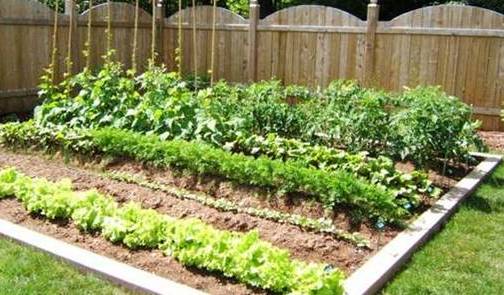
Gardening,   Gardening always sounded easy to me.  You put seeds in the ground, water them, and you grow food.  But it's not so easy.  I've done a garden of some kind almost every year for the past 10-15 years and every year I learn something new and realize how much more I need to learn.  In addition to knowing how to prep the garden and plant the seeds correctly, it's also helpful to know when to harvest the foods.
Source: Home-Canning.com

Food Preservation.  In addition to growing our own food, we need to know how to preserve.  I have a dehydrator but I'm not thrilled with my dehydrating results, except for my beef jerky.  My previous attempts have all turned out either too soft, or burnt.  I have friends who know how to can and I really need to learn how but first I need to get my garden to product enough to can.

Hunting,   My husband has volunteered to learn this skill for our family.  Without him, I would probably have to become a vegetarian or rely on the skills of others.  So far, my husband has gone deer hunting several times without success.  It's not so easy to find the deer and then make the shot.  I guess that means I should say that you need to have a rifle and/or gun plus ammunition, plus a knife you can use to prepare the meat.

Source: chicagofree.info

Fishing.  As we learned on our camping/fishing trip, you have to have the right equipment for where you're fishing.  This is our second time at this river famous for it's trout with NO success!  We finally attended a How to Fish this river class in the afternoon and confirmed we were using the right bait - but too big a line.  The fish could see our line and wouldn't bite.  Now we'll be better prepared on our next trip.  And we need to learn the best way to clean the fish and cook it in such a way that all of us like it.  Put fishing gear on your list of items to have.

Defense.  In the story, the characters have to use their shooting skills not only to hunt, but also to defend themselves.  In addition to hunting, my husband also works on his shooting skills by heading to the range.  This is another area that I have little interest in but my husband, and my 9 y/o, really enjoy this as a hobby. 
Source: Compost Junkie

Composting.   Having your own compost pile is a great way to help your garden grow AND to reduce the amount of waste generated by your family.  In Last Light, the trash builds up without trash service, until someone teaches them how to reuse many items and how to compost.
Source: Mother Earth News
How to wash and dry clothes without electricity, A few years ago we put up a clothesline because I didn't like that the dryer heated up our house during the summer.  Last year, I used the clothesline almost exclusively from April until October because our dryer was not working correctly (it made the laundry smell nasty).  Fortunately, by practicing over the previous summers, I'm pretty good at hanging out clothes in a way that doesn't make them stiff as a board.  I didn't realize there were so many tricks to using a clothesline. As for washing, that's a skill I need to develop.

Source: Sports We Play

Cycling.  In Last Light, the EMPs take out all vehicles that use a semi-conductor, which is most vehicles on the road today.   Many people turn to cycling as their primary mode of transportation since this is a suburban area without horses.  My husband is a pretty good cyclist (his favorite Saturday involves a 40-50 mile bike ride).  I am not.  I need to build up my endurance and strength on the bike and my daughters need to learn to ride without training wheels.  We also need a way to haul cargo.

Powerless food preparation.  I grew up in Girl Scouts learning lots of outdoor cooking methods but I haven't used them much since.   I can cook in a dutch oven and that's one of our backup methods in case of a power outage in the winter - dutch oven in the coals of the fireplace.  I can also use our barbecue grill and our camp stove.  Things I'd like to learn/have:  a fire pit in our backyard with a cooking grate, a sun oven, pie irons (like we used camping with my mom).

 Food Storage (you knew that was coming, right?).  In Last Light, stores ran out of supplies quickly and without transportation, they did not get re-stocked.  So having a well stocked home store would be a life saver in the situation presented in Last Light.  But make sure you have a non-electric can opener :)  Yes, I think a garden is essential too but if the situation started in the winter, starting a garden is not so practical living in the Midwest.

Water storage and purification.  Having a supply of water is a great emergency preparedness supply.  But eventually it will run out and I can't use the tap.  So having a way to purify water, and knowing how to do it correctly, comes in handy, especially if we're having to relocate during the emergency.  In Last Light, they learned how to turn everything that would work into ways to transport water so that having a bucket or two needs to be on the list of supplies.

Each year, Food Storage Made Easy does a 7 day challenge and each day is a different situation.  I've enjoyed reading the experiences that others share as they participate.  Maybe this year, I'll take the challenge and see other areas I need to work on since I KNOW this list is not complete!

Do I believe an EMP is going to happen?  I don't know.  I've read another series of books where an EMP is deliberately caused as an attack against our country.  I literally pray that these situations don't happen but in my ideal world, I'll be prepared if they do.  And in many other less drastic situations, like a prolonged power outage due to natural disaster, these skills can all come in handy.

May 22, 2012

Joplin Tornado - 1 year later

Photo by Mike Gullett – AP


One year ago, on a Sunday afternoon, this image became reality for us.  We live an hour away from Joplin and when the tornado struck, we were stunned.  My husband's boss and one co-worker live in Joplin (many people who work for the same company live in Joplin, but I'm talking on the same team).  I remember the many phone calls trying to find out their status.  At the same time, the storms were heading our way so we were also changing our plans and taking shelter at a neighbor's house who has a basement.

His boss and his family took shelter in their laundry room.  Their home was destroyed around them and they had to escape by climbing up through the debris out of their laundry room.  Fortunately his whole family survived. We were able to reach him Sunday evening and relayed information among the rest of the team.  But the co-worker was not so easy.  It took until Monday afternoon for word from the co-worker to reach the team.  He and his family were fine and there was some damage to his some, but it was not destroyed.  Much of that week was spent gathering items for tornado victims.
Photo by Landov Media

Our first news of the tornado was someone saying there was concern that the St John's hospital in Joplin was at risk of a gas explosion.  That's when we turned on the news and discovered the damage the tornado had done.  As the stories from the hospital poured in, it was unmanageable to us.  Both of us had worked in a hospital for about 10 years and always felt so safe even in tornado warnings.  Then to learn that the tornado had actually moved the hospital off it's foundation!

One year later, we have been blessed with a light tornado season so far, but the memories are still so real.  Take a moment today to remember those affected by the Joplin tornado and to evaluate what you need to do to better prepare your family.  Some takeaways we've discussed:
  • add a map to your 72 hr kit - with landmarks, street signs, and buildings destroyed, it was hard to determine your location after the tornado.  
  • Take shelter when those sirens go off!
  • Get a weather radio and sign up for text message warnings.  We don't live too far from a siren but we also have a weather radio in our home to give us additional warning and we signed up for text messages for tornado warnings in our area in case we're not at home.
  • Let your family know where you take shelter
 I also recommend you read Advice from an Expert Dad.  This dad is an emergency management structural engineer and knows what he is talking about.

Our prayers go to those who were in Joplin that day one year ago and for those who weren't but had loved ones there!

May 8, 2012

Are you a prepper?

When I attended the USA Prepares Get Prepared Expo in April, one of the other exhibitors asked me if I was a "prepper"?  My immediate response was I don't think of myself as a prepper but I like being prepared.  My primary preparedness scenario is job loss/unemployment.  What can we do now to be prepared in the case of my husband losing his job?  I'm also trying to be prepared for natural disasters like a tornado, major ice storm, or even an earthquake.

For some reason this question hasn't left me.  And I have though many times about it.  Am I a prepper?  And why did I immediately think No.  The reason I think I immediately thought No is a stereotype that is portrayed so much of a prepper being an extremist.  But what is a real prepper?  I don't think a real prepper is someone who is plotting ways to overthrow our government as is sometimes portrayed in the media.  I think a real prepper is someone who is trying to be prepared for a variety of scenarios, whether it be a natural disaster, economic issues, public dangers, etc.  They care about their family and want to provide for them at all times.

No matter my political beliefs, I know that public riots are possible whever we live.  We have been blessed to not have them in our area but I've seen a little bit on the news where they've happened.  They may not have been big or widespread but for those in that immediate area, it definitely impacted their lives - and how comforting it would be to be able to take refuge in our home if that happened where we live.

A few years ago, there was lots of talk of a bird flu epidemic where we would be expected to hole up in our homes for several weeks to prevent the spread of disease.  Does that seem a likely scenario today?  Maybe not.  But I'd like to be prepared if something like that happened.

Living in the Midwest, I'm not worried about a tsunami or hurricane.  But you might have this in your potential scenarios.  When Japan was hit with the tsunami and the stories came of just moments to evacuate to higher ground and so many escaped with nothing but the clothes on their back, I had the immediate thought of THAT is why it is essential to have a 72 hr kit that you can grab in seconds as you head out the door.

There are so many scenarios that we can come up with that we would need to be self-reliant for food, household supplies, power, etc.  Some are more likely to happen than others but being prepared for one tends to make us better prepared for the others.

What brought these thoughts on today?  I'm planning my garden.  I grow a garden to eat fresh fruits and vegetables.  I grow a garden to have that skill in time of need in the future.  Each year, I become a better gardener which means that if I ever HAVE to provide for my family from the garden, we're likely to have a pretty good garden compared to if I'd never gardened.

I have lettuce and spinach growing and ready to eat.  But I haven't been eating them.  I NEED to eat them!  I NEED to plan my menus around what I'm growing and what I'm storing!  Why?  If my family isn't used to eating the things I grow, in a time of need, they still won't eat it and it won't be very helpful to us.  That doesn't only apply to my garden.  It also applies to any food I store in my home.  If I set it on the shelf to eat ONLY in time of need but my family isn't used to it, they're going to say "Ew!  Gross!" when I put it on the table and that's only going to add to any stress at that time.  And what if it really is gross?  I don't want to invest in a 1 year supply of something only to discover that it truly tastes horrible OR I don't know how to use it.

So go experiment!  Try growing a garden!  Incorporate your food storage into your regualr menus.  Learn how to use the different foods you're storing.  Learn how to cook without electricity (I'm putting this on my list of posts to write and of things to learn more about).  Learn how to dry clothes on the clothesline without having them be able to stand up on their own.

I'm so grateful for the little promptings I've had over the years and for the skills I've developed.  I don't think of myself as an expert in any of these but I'm working to move beyond Novice and definitely beyond "No Experience or Knowledge".  I'll share what I've learned and what I continue to learn here.

What types of preparedness would you like posts for?  What scenarios are you preparing for in your family?

As you ponder how you want to get prepared, don't forget to sign up for my Dreaming Big Giveaway today!

May 4, 2012

72 hr Kit Supply List

UPDATED 5/4/12 - Something prompted me to relook at this post today - and I discovered that the 2nd half is missing!  How did that happen?  I apologize!  I have redone the second half this post now.

I have a goal for May to get our 72 hr kits updated.  And I'm going to have you tag along with me on this journey to help push me to actually get it done!

The first step is to identify what we need in our 72 hr kits.  And that's what I'm going to highlight today.

You have to personalize your 72 hr kit to fit the disasters you are most likely to face.  If you live in Missouri, like I do, I don't need to be prepared for a hurricane.  But it is highly probable that I will face a tornado warning, or two or three, this Spring.  So that's the disaster I focus on being prepared for.  We also have a low probability of earthquakes so I keep that in the back of my head.  I have friends and family who live in Maryland and last year, they went through an earthquake, a hurricane (reduced to Tropical Storm at that point) and tornadoes in a very short time frame.  They had barely recovered from the first to be hit by the next storm.  So look at what situations you are likely to be facing and spend your efforts on the most likely first.

Remember that a 72 hr kit needs to be portable so you need to be able to lift it.  That's where I'm looking forward to replacing the canned foods in our 72 hr kits with THRIVE freeze-dried Foods which are healthy AND lightweight!  Over the next few weeks, I'll prep a menu for our 72 hr kit and share it with you.  For now, my list of supplies is just going to say 3 day supply of food and water.

There are many sources for a list of 72 hr kit supplies.
The Texas Trainer's List from NOAA
Ready.gov
How to Make a 72 Hour Kit for Emergency Preparedness


My newest resource is the Emergency Kit Planner from Shelf Reliance.  I'm going to walk through it with you today.  When you click on the Kit Planner, you'll see the page below.  You can enter in your last name or leave it blank and then hit Continue.  It will then ask how many members there are in your family.

Step 2 is entering in the members of your family. For my family's privacy, I did the screen shot before entering ages.

After clicking Continue, the Kit Planner asks for Plan Settings - how many days (choose from 1 to 14 days), the strength of your kit (basic to supreme), the type of kit - traditional, for at school or for in the car, and any specific disasters you want to plan for.  I'm selecting 3 days, traditional and Tornado because that is our family's biggest threat.

The Kit Planner generates our family's plan with a grand total of $485.96, with $211.62 of that for food and water.

I can edit this list to remove those items I already have or add other items that I want.  Which means I need to take an inventory of what we already have.  That will be my project for next week (hold me accountable please).
When I click Purchase My Kit, it moves everything into my Shopping Cart and the price becomes $401.09 because we're going through my Consultant Website.

Now, when I log in, it recognizes that I am a Q Club member and the price drops to $383.14.

Of course, if you are overwhelmed with figuring out what you want/need in your 72 hr kits, Shelf Reliance offers a wide variety of Pre-Assembled 72 hr kits from survival packs to supreme for 1 to 4 people.  We'll go through the different Pre-Assembled options later this month.

Don't forget to submit your entry into the Dreaming Big Giveaway by posting a comment on the Giveaway's post!